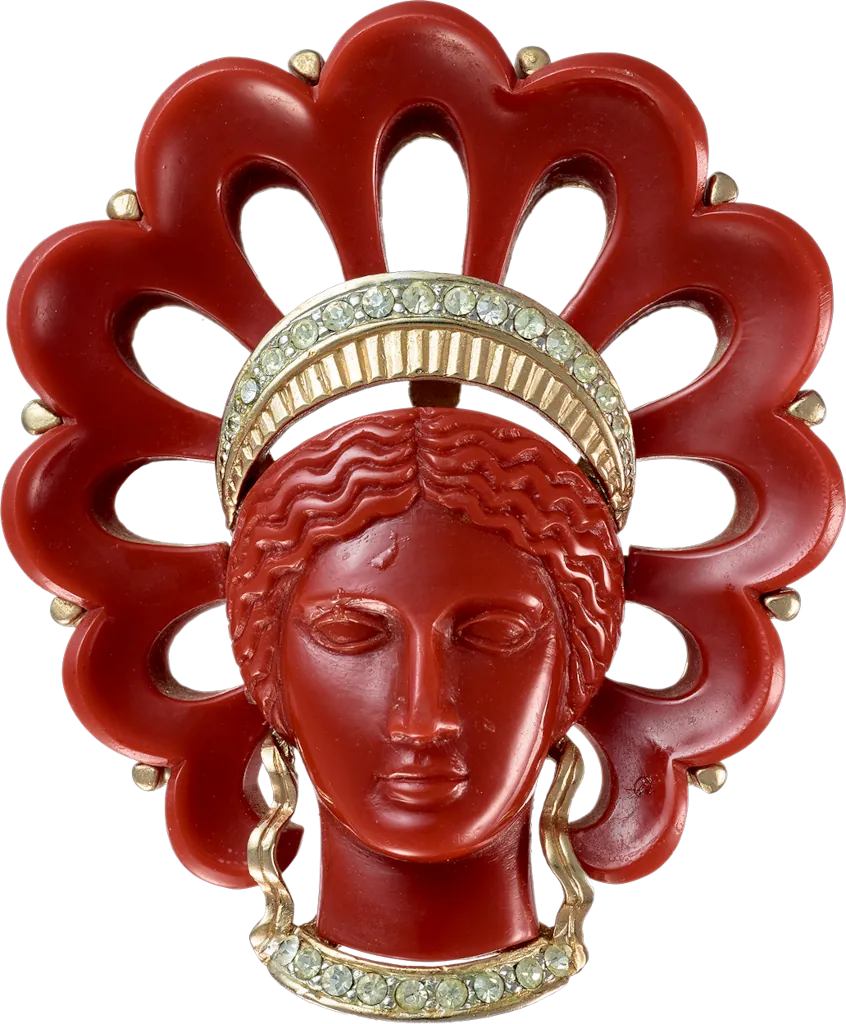
This brooch is by the American designer Boucher. Marcel Boucher was born in Paris in 1899. He worked for Cartier in Paris and then moved to New York in 1925. He continued to work for Cartier until 1930 when he went to work for the Mazer Brothers. The Mazer Brothers were part of a large family that emigrated from Russia at the beginning of the 20th century. More on the Mazer brothers in a future Brooch of the Month. Back to Marcel Boucher, he worked for the brothers for seven years before setting up his own company with his wife Jeanne and Arthur Halberstadt in March 1937. Arthur Halberstadt had been a salesman for Trifari for ten years, and then with the Mazer Brothers for a couple of years before joining forces with Marcel. The firm had showrooms on Fifth Avenue New York and in Los Angeles. During the war some production was temporarily suspended, and some was transferred to Mexico. In 1949 Arthur Halberstadt retired and Milton Ledner took over the commercial side of the business. Also that year Raymonde (later known as Sandra) Semensohn joined the firm as an assistant designer, she worked for Boucher till 1958, when she went to work for Tiffany. In 1964 Marcel divorced Jeanne and married Sandra, but their union was to be short lived. Marcel died suddenly on 22nd January 1965 at the age of 66. In March the same year Sandra became president of the company. As the fashion for costume jewellery waned the company was sold in 1972 to Davorn Industries, a watch manufacturer.
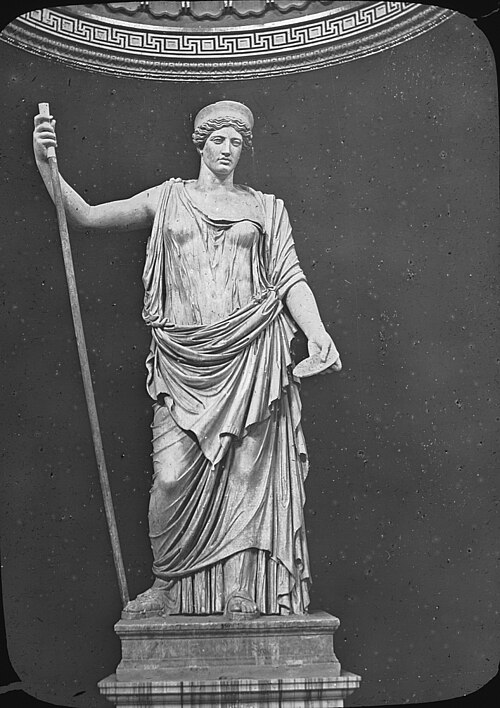
Juno is the Roman goddess who was the wife of Jupiter (chief god) protector of marriage, childbirth and the Roman state. At Juno’s temple in Rome the geese were sacred because they saved the city from the invading Gauls (French), the guards had fallen asleep but the ever-vigilant geese honked so loudly they were woken up and fought off the Gauls averting disaster. The month of June is also named after her.